
AAA Affordable Wildlife Control · Since 2008
Groundhog Removal Toronto
Humane groundhog removal from under decks, sheds and porches
Big hole beside the deck? Garden eaten overnight? We get groundhogs out with one-way doors, time the job around babies and hibernation, and install a buried steel mesh barrier so they can’t dig back in.
$300+ one-way door removalBuried L-shaped mesh barrierNo trapping or relocation

🦦 Humane one-way door removal
Groundhog under your deck?
Get your price over the phone
On this page
Groundhog Removal in Toronto
The groundhog, also called a woodchuck, whistle pig or land beaver, is one of the most common nuisance animals in Toronto yards. A single groundhog can move several hundred kilograms of soil digging its burrow, and when that burrow is under your deck, shed, porch or foundation, it can put your home at risk of real structural damage.
It’s a lot easier to keep groundhogs out than to get rid of them once they’re comfortable. AAA Affordable Wildlife Control has removed groundhogs from Toronto homes since 2008. We find every burrow entrance, let the groundhog leave through a one-way door, and install a buried L-shaped steel mesh barrier so it can’t dig back in.
We don’t trap and relocate groundhogs. Relocation is restricted in Ontario, babies get left behind, and the empty burrow is quickly taken over by another groundhog, a skunk or a rabbit.
Signs You Have a Groundhog in Your Yard
Groundhogs are active in the daytime, especially in the morning and early evening, so you may actually see one. Other signs include:
A large hole with a dirt mound
A main entrance 25 to 30 cm wide with a fan of fresh soil beside it, often under a deck, shed, porch or concrete steps.
Hidden escape holes
Most burrows have 2 to 5 entrances. Smaller “plunge holes” have no dirt pile and are often hidden in long grass or under shrubs.
Eaten gardens
Beans, peas, lettuce, squash, melons, clover and flowers chewed down to the stems, often overnight.
Gnawed wood and wires
Clawed or chewed wooden deck posts, fence boards, tree bark, and sometimes irrigation lines or outdoor cables.
Sinking soil or patio stones
Dips in the lawn, shifting patio stones, or cracks in a concrete slab over a tunnel.
A whistle in the yard
A sharp, high whistle when a groundhog spots you, which is where the name whistle pig comes from.

🕳️ Burrow under the steps
Big hole by your steps?
We evict and seal it
Groundhog Damage to Decks, Sheds and Foundations
Groundhog tunnels can run 10 metres or more and go 1.5 metres deep. That much digging next to a structure causes problems:
- Decks and porches: burrows undermine footings and posts, which can make a deck sag or shift.
- Sheds and garages: groundhogs love the dry, sheltered space under a shed floor or concrete pad.
- Foundations: tunnels along a foundation let water collect against the wall, which can lead to leaks and cracks.
- Concrete steps, slabs and patios: soil removed from underneath can make concrete crack or settle.
- Lawns and gardens: open holes are a tripping and ankle-injury hazard, and a groundhog can wipe out a vegetable garden in days.
- Wiring and irrigation: groundhogs gnaw on buried or low cables and plastic lines.
Our Humane Groundhog Removal Process
- Inspection. We find every entrance and plunge hole, check under decks, sheds and steps, and look for signs of babies.
- Timing. We plan around baby season in spring and hibernation in winter, so no young or sleeping groundhog is sealed inside.
- One-way door. A one-way door goes on the main entrance and the other holes are blocked. The groundhog leaves to feed and can’t get back in.
- L-shaped mesh barrier. We dig a trench around the deck, shed or porch and install heavy-gauge galvanized steel mesh at least 30 cm deep, bent outward in an L so groundhogs can’t dig under it.
- Fill and finish. Once the groundhog is gone, the door comes off, the burrow is filled with gravel and soil, and the area is backfilled.
- Prevention advice. We show you what’s attracting groundhogs to your yard and how to keep the next one out.
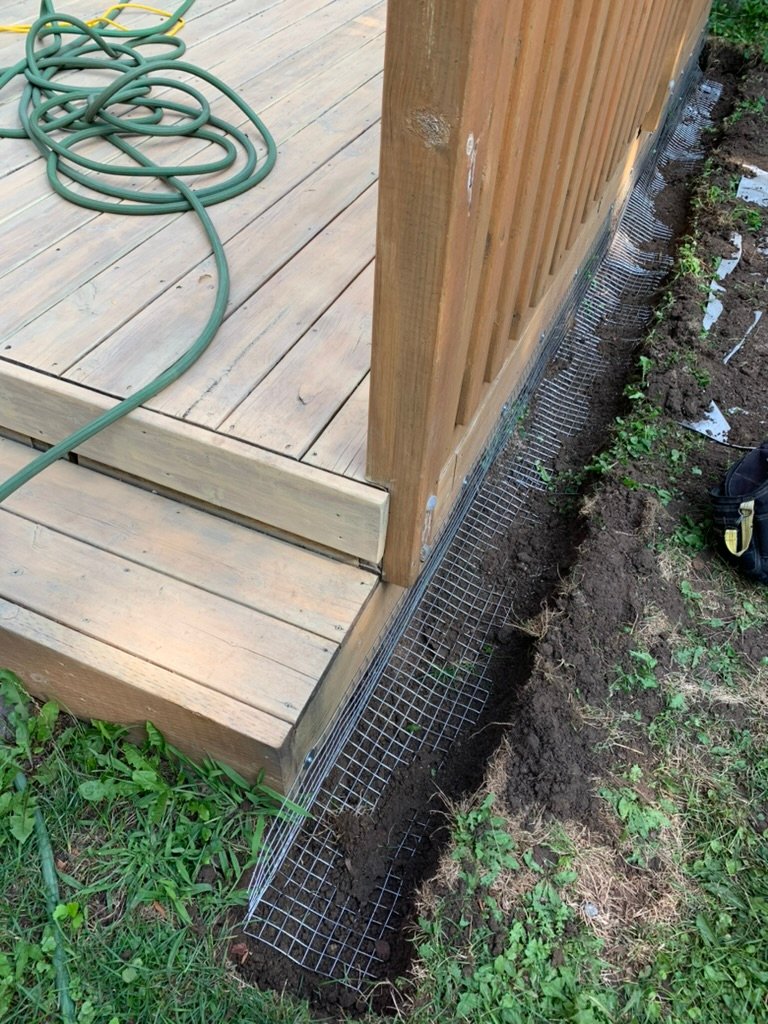
🛡️ Deck barrier installed
Want groundhogs gone for good?
Ask about deck and shed screening
Groundhog Removal Cost in Toronto
The cost depends on how many burrow entrances there are, how big the deck, shed or porch is, and the time of year. Here’s what to expect:
| Groundhog Service | Typical Cost | Notes |
|---|---|---|
| Groundhog removal (one entry point) | $300 to $450 | Inspection, one-way door and sealing the burrow |
| Groundhog under a deck, shed or porch | $300 to $450 + about $22 per foot | One-way door plus buried L-shaped mesh barrier |
| Baby groundhog removal | Quoted on inspection | Timed so the mother and young leave together |
| Burrow filling | Quoted on inspection | Gravel and soil to close tunnels near structures |
| Dead animal removal | $300 to $450 | Locating, removal and odour treatment |
Want an exact price for your home?
Call and describe what you’re seeing and where. We’ll give you a price range on the phone and confirm it on site before any work starts.
Groundhog Baby Season in Toronto
Groundhogs mate as soon as they wake up from hibernation in March. After a pregnancy of only about a month, a litter of 2 to 6 babies (called kits or chucklings) is born in late April or May, deep in the burrow.
If the burrow is sealed in May or early June, the young are trapped underground and die, which leaves a smell under your deck or shed. The mother will also dig frantically to get back to them, often making a brand-new hole right beside the old one.
Humane Removal of Baby Groundhogs
Young groundhogs start coming out of the burrow at around 6 weeks old, usually in June, and leave home in July. We time the one-way door for when the young can travel with their mother, so the whole family leaves together and nothing is left behind.
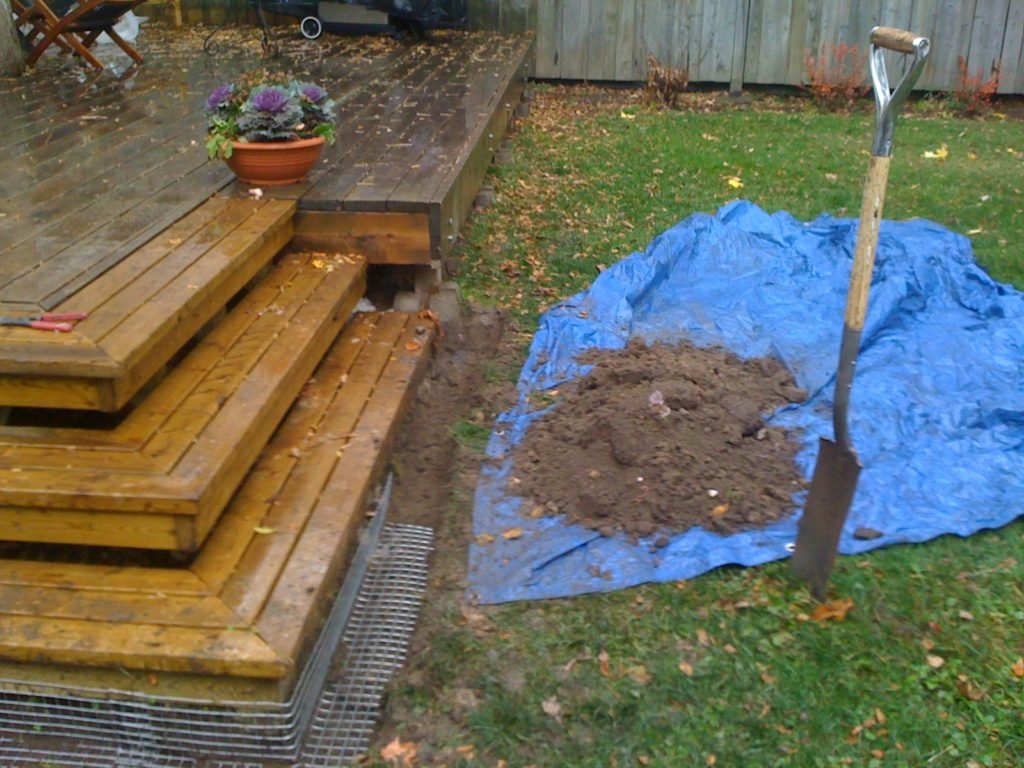
🦦 Deck burrow work
Groundhog babies under the deck?
We keep the family together
Groundhog Control Calendar
Groundhogs follow the same pattern every year. Use this calendar to see what they’re doing each month and the best time to act.
January
No babies.
Deep hibernation underground.
Plan screening for spring. One-way doors don’t work on a sleeping groundhog.
February
No babies.
Still hibernating. Males may wake late in the month.
Book an early spring inspection.
March
Mating season begins.
Groundhogs wake up, mate and clean out burrows.
Best window to evict before babies are born.
April
Females are pregnant (about 31 days).
New burrows dug under decks and sheds.
Act early in the month, before births.
MayBaby season
Litters of 2 to 6 born in the burrow.
The mother feeds heavily on lawns and gardens.
Don’t seal a burrow without checking for babies.
JuneBaby season
Young come out of the burrow at about 6 weeks.
Families feed near the burrow in the daytime.
Best time to evict the whole family together.
July
Young leave to dig their own burrows.
Garden damage peaks.
Screen decks and sheds once the family is out.
August
No babies.
Heavy feeding to build fat for winter.
Good time for one-way doors and barriers.
September
No babies.
Still fattening up. Burrows are prepared for winter.
Last good eviction window before hibernation.
October
No babies.
Groundhogs start going into hibernation.
Finish screening before they go to sleep.
November
No babies.
Hibernating.
Mark burrow holes so they can be sealed in spring.
December
No babies.
Hibernating.
Plan ahead for a March eviction.
The Groundhog Life Cycle
| Stage | Age or time | What happens |
|---|---|---|
| Waking up | March | Groundhogs leave hibernation, and males go looking for females. |
| Pregnancy | About 31 to 32 days | The female prepares a grass-lined nest chamber. |
| Birth | Late April to May | 2 to 6 young are born blind and hairless. |
| Eyes open | About 4 weeks | The young start moving around the burrow. |
| Leaving the burrow | About 6 weeks | Young groundhogs come out to feed near the entrance. |
| Independent | 2 to 3 months | In July the young leave and dig their own burrows. |
| Adult | About 1 to 2 years | Most groundhogs breed the spring after their first winter. |
How Long Do Groundhogs Live?
In the wild, groundhogs usually live 2 to 3 years, and a lucky one can reach about 6. Many young groundhogs don’t survive their first winter or are hit by cars. In captivity, groundhogs can live 10 years or more.
Do Groundhogs Hibernate?
Yes. Groundhogs are true hibernators. From about October to March, they sleep in a sealed chamber below the frost line. Their body temperature drops to just a few degrees above freezing and their heart slows to a handful of beats a minute. Because a hibernating groundhog won’t come out, one-way doors only work in the active season, from March to October.
Why Trapping and Relocating Groundhogs Doesn’t Work
- Ontario rules: under Ontario’s wildlife regulations, a nuisance animal caught on your property has to be released within 1 km of where it was caught.
- Babies left behind: trapping a mother in May or June orphans the young underground.
- The burrow stays open: an empty burrow is quickly taken over by another groundhog, a skunk or a rabbit.
- Repellents rarely work: a groundhog with an established burrow usually ignores sprays, granules and ultrasonic devices.
Groundhog Prevention Tips
- Screen under decks, porches and sheds with galvanized steel mesh buried at least 30 cm deep and bent outward in an L.
- Fence the vegetable garden with mesh buried 30 cm deep and a loose, floppy top that groundhogs can’t climb over.
- Clear cover by trimming bushes, removing brush and not stacking wood next to fences or the house.
- Fill old burrows with gravel and soil once you’re sure they’re empty.
- Harvest early and pick up fallen fruit and vegetables.
- Act early in spring, before a female has babies under your deck.
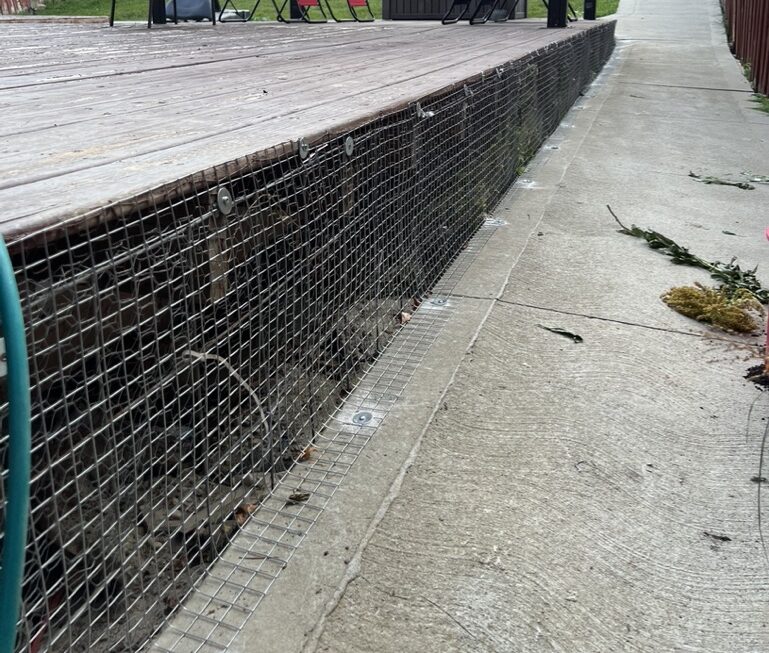
🛡️ Full-length deck screening
Holes along your deck?
We screen the whole perimeter
Groundhog Removal Near You
We provide groundhog removal across Toronto and the GTA, including:
- Brampton
- Mississauga
- Markham
- Scarborough
- Thornhill
- Vaughan
- Etobicoke
- Rexdale
- Richmond Hill
- Pickering
- Caledon
- Milton
Other wildlife problems? We also handle:
Groundhog Removal FAQ
Will a groundhog leave on its own?
Rarely. A groundhog that has dug a burrow under your deck or shed will usually use it for years, and its young often dig new burrows nearby. A one-way door plus screening is the only reliable fix.
Are groundhogs dangerous?
Groundhogs usually run from people, but a cornered one can bite hard. They can carry fleas and ticks, and like any mammal they can carry rabies, so never handle one. The bigger risk is to your deck, shed and foundation.
When do groundhogs have babies?
Groundhogs have one litter a year, born in late April or May. The young stay in the burrow for about 6 weeks and leave home in July.
How long do groundhogs live?
Most wild groundhogs live 2 to 3 years, and some reach about 6. In captivity they can live 10 years or more.
Can you remove a groundhog in the winter?
Not with a one-way door, because a hibernating groundhog won’t come out. We can screen the area in late fall once we’re sure it’s empty, or come back in March when it wakes up.
How deep do groundhogs dig?
Burrows are usually 1 to 1.5 metres deep, with tunnels that can run 10 metres or more and 2 to 5 entrances.
Can groundhogs climb or swim?
Yes, both. Groundhogs can climb low fences and trees and swim well, but they mostly get in by digging under things.
Will a groundhog damage my foundation?
It can. A burrow along a foundation lets water sit against the wall and can wash out soil under concrete steps and slabs. Screening the area and filling the burrow stops it.
Do groundhog repellents work?
Not usually on a groundhog that already has a burrow. Castor-oil sprays and motion devices may push a new arrival away, but an established groundhog needs to be evicted.
How long does groundhog removal take?
The inspection, one-way door and screening are usually done in one visit. Most groundhogs leave within a few days, and we return to remove the door and fill the burrow.
Call Today for Groundhog Removal
Call our friendly team for a fast, accurate estimate or a free quote, and find out how quickly we can make your yard groundhog-free.
Toronto & the GTA
Groundhogs out. Burrows filled. Deck sealed.
Humane groundhog removal with clear pricing before we start.

