Squirrel and Raccoon Removal Toronto

Raccoon Removal Toronto How Much Does Raccoon Removal in Toronto Cost

Squirrel Removal and Raccoon Removal in Toronto

Our our squirrel and raccoon removal costs ranging from $150 for small raccoon latrine or squirrel nest cleaning to $550 for full-service baby season removals. Depending on repairs and the installation of prevention measures, the cost could easily double, so it’s better to be aware and prepare ahead of time with our detailed plan when you call to book.

Since 2008, our advertised wildlife removal costs in Toronto have remained highly competitive with our standard service including a thorough inspection, installation of a one-way door, and a full report outlining the preventative measuresย required to keep squirrels or raccoons from re-enteringย your home or commercial property.

Removal of Raccoons From A Commercial Building

To permanently resolve a commercial raccoon problem, professional wildlife removal companies must deploy certified technicians to execute a non-disruptive, humane exclusion process. Unlike residential settings, managing an urban wildlife infestation on commercial private property requires specialized structural sealing to prevent health code violations, employee safety issues, and operational downtime.

Raccoons actively target commercial roofs, loading docks, and warehouses because they provide expansive, warm shelter. Once inside, they cause significant damage to industrial HVAC systems, electrical wiring, and roofing membranes. To safely remove raccoons from large-scale facilities, the industry-standard protocol relies on a commercial-grade humane raccoon removal system. This system utilizes heavy-duty, spring-loaded one-way doors that allow the animals to exit the building naturally while completely locking them out from returning.

Get Started

our structural problems. If you suspect animals have breached your home or you find droppings on your property, contactย AAA Affordable Wildlife Control immediately to secure your home.
Wildlife Control North York, Wildlife Removal North York, AAA Affordable Wildlife Control Services in North York

What’s Included in Our Basic Raccoon ans Squirrel Services

โœ” Comprehensive Roof & Attic Inspection

Our experienced professionals inspect your roof, attic, walls, and other structural areas to identify how red squirrels, Eastern Gray Squirrels, raccoons, and other critters gained access.

โœ” One-Way Door Installation

The most humane wayย to remove animals from your property. Once the squirrels exit in search of food, water, or warmer temperatures during cold weather, they cannot re-enter.

โœ” Prevention & Wildlife Proofing

We seal all vulnerable entry points and address site conditions as part of habitat modification to help prevent raccoons and protect your home or commercial property from:

Heavy-gauge screening is used to reinforce potential entry points.

Galvanized steel mesh helps block raccoons from chewing through entry points.

โœ” Pest Control Services & Cleanup

We also offer, dead animal removal, and sanitation for areas contaminated by droppings, urine, food sources, or nesting materials that can create unsanitary conditions; raccoon urine can also damage insulation and structural materials.
Raccoon Removal Rexdale, Wildlife Control Near Rexdale

Why Raccoon Services Are Needed in Urban Areas

Toronto’s dense urban areas, ravines, and older neighbourhoods create ideal conditions for wildlife activity. As raccoons seek warmth in atticsย during cold weather, they may cause:

โš  Structural Damage

Raccoon damage:

  • electrical wiring โ†’ major fire hazards
  • building materials
  • insulation
  • rooflines
  • roof vents
  • soffits

Raccoons can exert up to 150 PSI of force when prying openings wider.

This can lead to extensive damage and expensive repairs.
Contact AAA Affordable Wildlife Control at (416) 560-8972. Book an Appointment for Wildlife Removal Services in Toronto, North York, Brampton and Mississauga

โš  Health Risks

Squirrels may carry parasitesย and bacteria that compromise indoor air quality.

โš  Increased Wildlife Activity

Unsealed homes attract:

  • raccoons
  • other rodents
  • birds
  • unwanted pests

If left unresolved, a single squirrel problem can escalate into multiple infestations.

Prices for Raccoon Removal Services in Toronto & GTA

Raccoon and squirrel removal costs vary depending on the presence of babies and prevention:

Wildlife Removal ServiceTypical Cost RangeNotes
Raccoon Removal in Toronto$450One-way door + sealing entry point
Raccoon Baby Services$550Baby season pricing
Full Attic Wildlife Prevention1000+Covers 20 extra areas (vents/soffit)
Bird Control / Bird Removal$300–$550Depends on nesting areas
Raccoon Under Deck/Shed/Porch$450 + $22 per footOne-Way Door + Prevention
Raccoon Latrine Removal$300 Average PriceRemoval + Enzyme Spray

We always provide transparent, competitive pricing for removal services in Toronto, including commercial properties. March through August; with a gestation period of about two months, females usually have 2โ€“8 cubs each spring.

Raccoon Removal Toronto

Get affordable raccoon removal services in Markham, Brampton and Mississauga.

How Raccoon Control Works

Remove Animals Humanely

The one-way door is installed so squirrels, raccoons, or birds leave naturally without harm, and professional wildlife control companies provide humane raccoon removal services using exclusion-first methods rather than relying on trapping alone. Relocation rules in Ontario are strict, and it is illegal to relocate trapped raccoons more than one kilometer under animal control regulations.

Seal & Protect

We secure all access points using wildlife-proof materials to protect the houseย from future wildlife intrusions.

Prevent Future Issues

Our prevention services include drip edge installation, roof vent screening, and full-home squirrel control services, along with waste management steps to prevent raccoons from accessing food sources.

Seal garbage cans or secure bins with heavy-duty latches to deter raccoons from foraging.
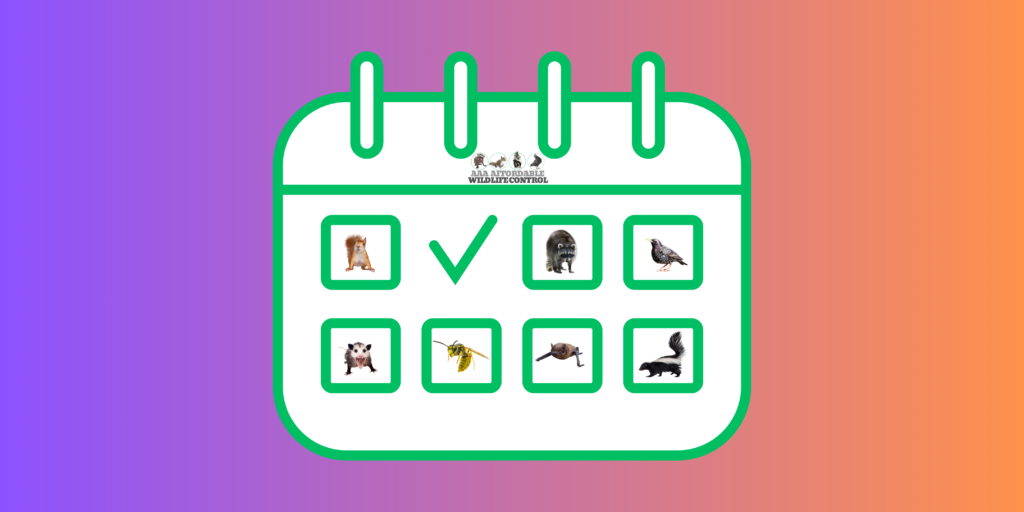
Wildlife Control Calendar

They often return to familiar areas due to strong homing instincts, especially when food sources are abundant.

Even one small opening can become a major wildlife gateway.

Squirrel Control Calendar

January

Baby Status: No new kits yet; squirrels rely on winter caches.
Breeding: Grey squirrels begin their mating season; red squirrels prepare to breed.
Foraging: Squirrels retrieve stored nuts and seeds.
Control Tip: Inspect attics and tree nests for early signs of activity.
Squirrel Control: Check for entry points!

February

Baby Status: No visible kits; many females are now pregnant.
Breeding: Peak mating season for grey squirrels; red squirrels mate later.
Foraging: Early buds and remaining caches provide nutrition.
Control Tip: Seal entry points before baby season starts.
Squirrel Control: Prevent nest formation!

March

Baby Status: Grey kits are born and hidden; red kits follow soon.
Breeding: Gestation from February's mating yields newborns.
Foraging: Foraging begins on emerging buds and foliage.
Control Tip: Avoid sealing gaps if active nests are present.
Squirrel Control: Monitor nesting areas!

April

Baby Status: Grey kits (6โ€“7 weeks) start exploring; red kits remain in the nest.
Breeding: Focus shifts from mating to nurturing the young.
Foraging: Fresh shoots and flowers boost foraging activity.
Control Tip: Plan for exclusions once the young become mobile.
Squirrel Control: Prepare for moving young!

May

Baby Status: Grey kits become more independent; red kits continue steady growth.
Breeding: Grey squirrels may start a second cycle; red squirrels maintain one litter.
Foraging: Abundant spring blooms and feeders provide ample food.
Control Tip: Inspect property for new entry points.
Squirrel Control: Act before further nesting!

June

Baby Status: Grey squirrels are pregnant with a second litter; spring kits are growing.
Breeding: Grey squirrels begin their second gestation cycle.
Foraging: Foraging shifts to summer fruits, seeds, and insects.
Control Tip: Monitor attics and tree cavities for nesting.
Squirrel Control: Watch for mid-summer nesting!

July

Baby Status: Grey summer kits are arriving; red kits gain more independence.
Breeding: Grey squirrels continue their second litter; red squirrels are not breeding.
Foraging: Foraging shifts to berries and garden produce.
Control Tip: Trim tree branches and secure accessible food sources.
Squirrel Control: Prevent new nesting!

August

Baby Status: Grey squirrels nurse their second litter; red squirrels continue their single cycle.
Breeding: Grey second litters persist; red squirrels remain on one cycle.
Foraging: Late summer triggers increased nut harvesting and early caching.
Control Tip: Secure outdoor food sources and inspect attics.
Squirrel Control: Deter late summer nesting!

September

Baby Status: Grey youngsters venture out; red squirrels guard their central caches.
Breeding: Breeding is over for the season; focus shifts to independence.
Foraging: Fall nut harvest intensifies with active caching.
Control Tip: Seal gaps and inspect caches before winter.
Squirrel Control: Prepare for winter!

October

Baby Status: No new births; juveniles are independent.
Breeding: Mating activity is paused for both species.
Foraging: Squirrels focus on caching โ€“ grey squirrels use multiple dens; red squirrels defend a central midden.
Control Tip: Evict squirrels before winter sets in.
Squirrel Control: Act now to prevent winter nesting!

November

Baby Status: No new kits; all young are bulking up.
Breeding: Breeding activity has ceased.
Foraging: Squirrels retrieve caches to build fat reserves.
Control Tip: Secure garages and seal attic openings.
Squirrel Control: Seal all entry points!

December

Baby Status: Grey squirrels initiate winter mating; red squirrels secure nesting sites.
Breeding: Grey squirrels enter their winter mating phase.
Foraging: Squirrels retrieve cached food and may roost in attics.
Control Tip: Inspect and seal any entry points.
Squirrel Control: Prevent winter nesting!

Toronto Squirrels in the Attic, Squirrel Control TorontoToronto Squirrels in the Attic
Toronto Squirrels in the Attic, Squirrel Control Toronto

Wildlife Removal Services Across Toronto & GTA

We proudly serve:

  • Toronto
  • High Park
  • North York
  • Scarborough
  • Brampton
  • Markham
  • Mississauga
  • Thornhill
  • Etobicoke
  • And all surrounding GTA communities

Trust our experienced professionals to deliver effective solutions, fast turnaround, and humane removal practices.

Wildlife Removal Near Toronto, Best Wildlife Removal Near Me

The raccoon removal process runs five stages — initial inspection, installing one-way doors, confirming the animal is out, permanent sealing, and a follow-up and takes 3 to 7 days start to finish in most Toronto homes. The inspection identifies entry points across the whole roofline, not only the one in use, since a raccoon that finds itself locked out will try every other weak spot before giving up. No lethal traps and no harmful chemicals are used at any stage: the animal leaves on its own to feed and simply can't return. Sealed points are covered by a [N]-year guarantee.

Squirrel removal follows the same humane exclusion sequence and usually completes in 3 to 5 days, since squirrels leave the attic to forage several times a day rather than once a night. The technician screens vents, soffit returns and the roof edge at the same visit, and recommends cutting tree branches back six to eight feet from the roofline — squirrels almost always arrive by branch. Work is done from outside with minimal disruption indoors; in most cases nobody needs to be home.

Squirrel removal in Toronto is $300 to $450 for the basic service and $550 during baby season, when a nest of young has to be located and hand-removed before any door goes on. The figure covers inspection, exclusion, sealing of the active entry, and the follow-up visit. Screening additional openings found during the inspection is quoted separately so you can see what each one costs rather than getting one lump number.

Squirrel Removal Cost Near Toronto, Raccoon Removal Cost, How Much Does Wildlife Control in Toronto Cost
Squirrel Removal Cost: How Much Does Squirrel Control in Toronto Cost

Dead animal removal in Toronto runs $300 to $450 depending on access, and odour usually peaks 5 to 10 days after death — faster in summer, considerably longer in cold weather. The carcass is located by smell and fly activity before any wall, soffit or deck board is opened, so only the necessary section comes out, and the area is cleaned and treated afterward. Never handle one yourself: raccoons in Ontario can transmit rabies, and the residue draws flies and other animals if it's left in place.

AAA Affordable Wildlife Control repairs the damage as part of the same job — loose shingles, torn soffit and fascia, pried roof vents, and chewed electrical wiring, which is the one that turns a wildlife problem into a fire hazard. Attic insulation removal and latrine cleanup are quoted alongside it, since raccoons use a single latrine site and their droppings can carry raccoon roundworm, whose eggs survive in the material for years and resist ordinary disinfectants. Repairs are itemized on the quote so you can decide what's done now and what waits.

Toronto grey squirrels have two litters a year: one born between late February and March, the second in August or September, with three or four young that stay in the nest for about 10 to 12 weeks. That double season is why attic calls spike twice rather than once. During those windows, the nest has to be found and the young removed by hand first, or the female will tear a new opening in the roof to get back to them.

When Do Squirrels Have Babies In Toronto? Squirrel Baby Season Info
When Do Squirrels Have Babies In Toronto?
Squirrel Baby Season Info

Raccoon baby season in Ontario runs from late February through June, with most kits born in March and April. A female raccoon has one litter a year, typically three to five kits, and they can't climb out on their own until roughly eight to ten weeks old. Any removal during that window starts with a hands-on attic inspection to locate the litter — which is exactly what the extra $100 covers, and why an exclusion door installed without that step kills the young and leaves the mother tearing at your roof.

Baby Raccoon Removal
Baby Raccoon Removal Toronto

Call Today for a Raccoon Removal

Call our friendly customer service team for a fast, accurate estimate or free quote, and learn how quickly our licensed technicians can make your home wildlife-free.

Wildlife Control, Wildlife Removal, Wildlife Control, Wildlife Removal

Summary
Rating
product image
Author Rating
Aggregate Rating
4.5 based on 285 votes
Brand Name
AAA Affordable Wildlife Control
Product Name
Raccoon Removal Toronto, Squirrel Removal Toronto

50 thoughts on “Squirrel and Raccoon Removal Torontoโ€

Leave a Reply