
AAA Affordable Wildlife Control · Since 2008
Wasp Nest Removal Toronto
Fast wasp, hornet and yellow jacket nest removal
Wasps under the eaves, in the wall or in the ground? Don’t wait for that small nest to grow. Our technicians treat and remove wasp and hornet nests safely, often the same day, so you save money and lower the risk of getting stung.
Same-day service availableHornets & yellow jacketsWall & ground nests

🐝 Safe nest removal
Wasp nest on your house?
Get your price over the phone
On this page
Wasp Control and Nest Removal Services
Call (416) 560-8972 for fast wasp nest and hornet nest removal in Toronto. Social wasps, hornets, yellow jackets and bald-faced hornets are everywhere in the warmer months, and their nests grow quickly. A nest the size of a golf ball in June can hold thousands of wasps by late August.
If you get too close or disturb the nest, you can quickly find yourself surrounded by a swarm. That can be dangerous for anyone allergic to wasp or bee stings, and painful for everyone else. Having a professional remove the nest with the right equipment makes sense, and dealing with it early saves you money on the removal cost.
Signs You Need Wasp Nest Removal
A few wasps in the yard are normal. These signs mean there’s a nest close by:
Wasps going to one spot
A steady line of wasps flying in and out of the same gap in the soffit, siding, a vent, a hole in the ground or a shrub.
A grey paper nest
A papery ball under the eaves, on a porch ceiling, in a tree or behind a shutter. Small open “umbrella” nests belong to paper wasps.
Buzzing in a wall or ceiling
Constant buzzing or scratching behind drywall, or wasps showing up inside the house near lights and windows.
Lots of wasps around food
Many wasps around garbage, recycling, BBQs and patio tables, especially in August and September.
Chewed wood
Fine grey scrape marks on fences, decks and sheds where wasps collect wood fibre to build their nest.
Wasps in a sunroom or attic
Wasps inside the attic, sunroom or garage often mean the nest is in the roof or walls.
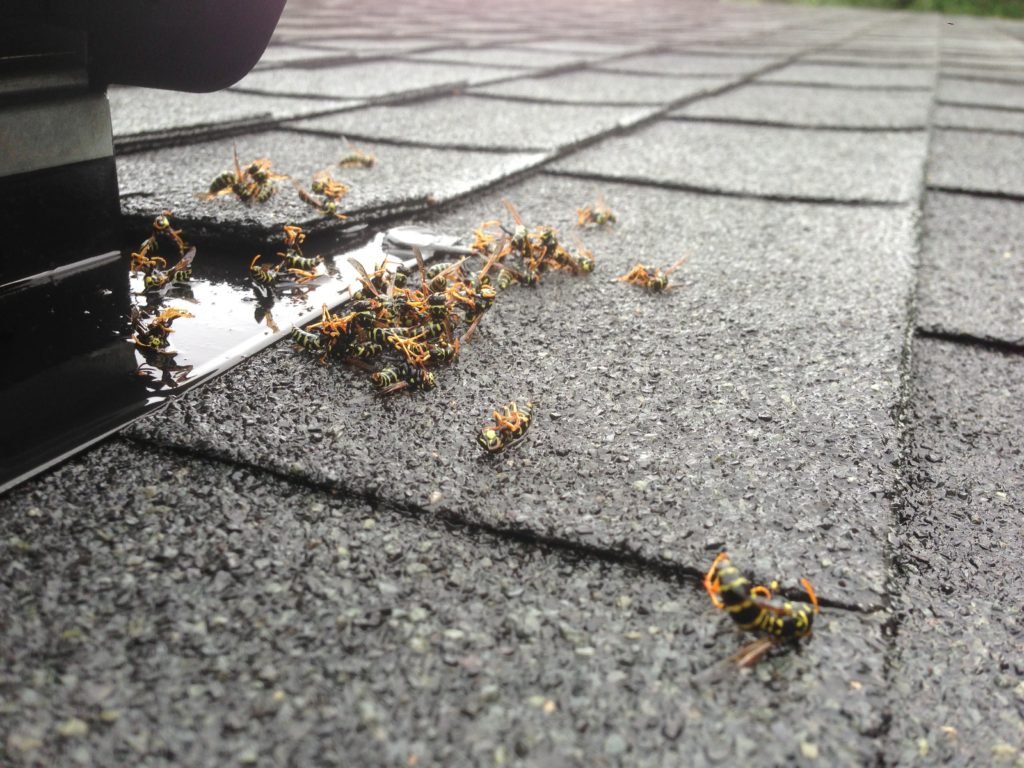
🐝 Wasps on the roof
Wasps going into your roof?
We find and treat the nest
Types of Wasps and Hornets in Toronto
- Yellow jackets: the most common stinging insect in Toronto. They build hidden nests in the ground, walls, soffits and sheds, and get aggressive around food in late summer.
- Bald-faced hornets: black and white wasps that build large, grey, football-shaped paper nests in trees, shrubs and under eaves. Very defensive of their nest.
- European paper wasps: slim wasps with dangling legs that build small, open, umbrella-shaped nests under railings, eaves, BBQ lids and window frames.
- European hornets: large brown and yellow hornets that nest in hollow trees, walls and attics, and can fly at night.
- Bees: honey bees and bumble bees are important pollinators and are not wasps. If you have bees, call us and we’ll tell you the best way to deal with them.
Wasp Stings and Allergic Reactions
Unlike honey bees, wasps and hornets can sting again and again, and a disturbed nest can send dozens of wasps out at once. Many people don’t know they’re allergic until they’re stung.
- Normal reaction: pain, redness and swelling around the sting. Wash it, use a cold pack and take an antihistamine if needed.
- Large local reaction: swelling that spreads over a large area, such as a whole arm. See a doctor.
- Allergic reaction (anaphylaxis): hives, swelling of the face, lips or throat, trouble breathing, dizziness or vomiting. Call 911 right away and use an epinephrine auto-injector if one is available.
- Many stings at once can be dangerous even if you’re not allergic, especially for children, seniors and pets.

⚠️ Sting reaction
Nest near where kids play?
Get it removed today
Our Wasp Nest Removal Process
- Find the nest. We track where the wasps are flying to find the nest and every entrance, whether it’s in a tree, the eaves, a wall, the soffit or the ground.
- Identify the species. Yellow jackets, hornets and paper wasps are treated differently, and bees are never treated like wasps.
- Protective gear. Our technicians wear full bee suits and use professional equipment to stay safe up ladders and on roofs.
- Treat the nest. We apply a professional treatment directly into the nest entrance, which reaches the wasps inside walls and underground.
- Remove the nest. Aerial nests in trees, eaves and porches are taken down and bagged. Nests inside walls usually stay and dry out, since wasps never reuse an old nest.
- Follow-up. Wasp activity drops within a few hours and is usually gone in a day or two. If it isn’t, call us back.
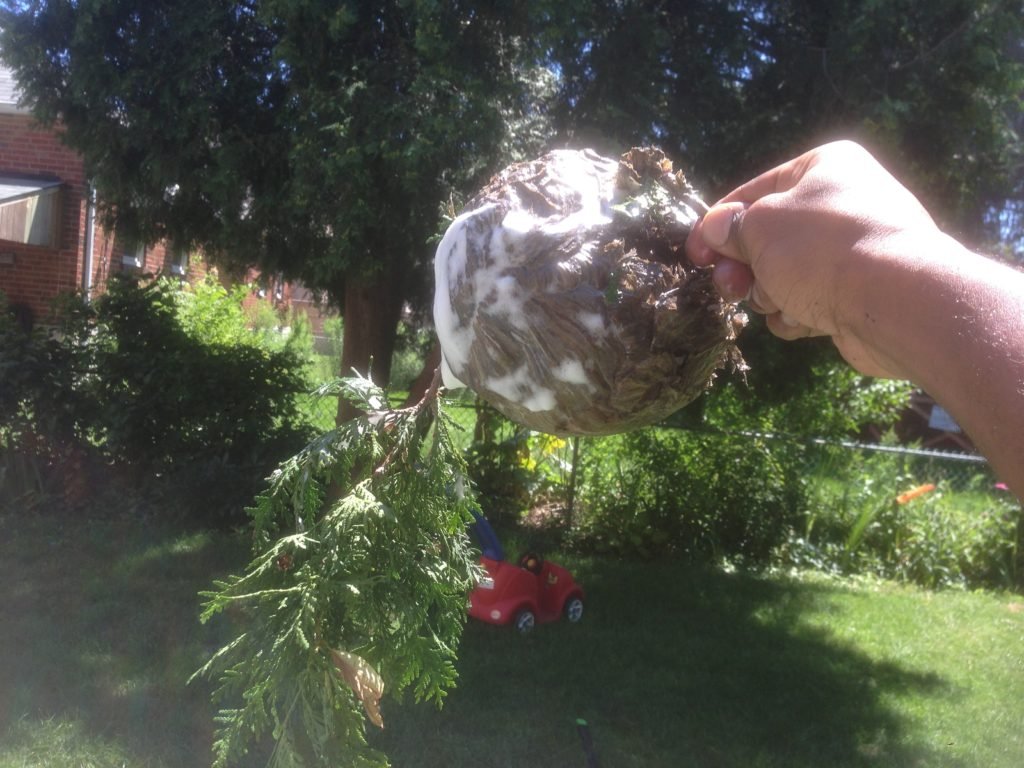
🐝 Hornet nest removed
Big nest in a tree or hedge?
We remove it safely
Wasp Nest Removal Cost in Toronto
Wasp nest removal is usually a single visit, and we give you a price on the phone. The main things that affect the cost are:
- Where the nest is: a nest in a shrub at ground level is quicker than one inside a wall or high on a roof.
- Height and access: second- and third-storey eaves and steep roofs need ladders and extra safety equipment.
- How many nests: it’s common to find two or three nests on the same house.
- How big the nest is: treat a nest early in the summer and it’s smaller, safer and cheaper.
- Same-day or emergency service when a nest is by a door, deck or play area.
Want an exact price for your home?
Call and describe what you’re seeing and where. We’ll give you a price range on the phone and confirm it on site before any work starts.
Wasps in Walls, Soffits and the Ground
Yellow jackets often build their nests out of sight inside wall cavities, soffits, roof vents, sheds or old rodent holes in the ground. These hidden nests can be the biggest of all.
- Never plug the hole. If you seal the entrance, the wasps chew their way out somewhere else, often straight through the drywall into your home.
- Don’t spray it with a garden hose or store-bought spray. It usually just angers the colony without reaching the nest.
- Never pour gasoline or set fire to a nest. It’s dangerous and illegal.
- Mow carefully around ground nests, as the vibration sets them off.
Professional treatment goes in through the entrance and reaches the whole nest. Once the colony is gone, the entrance can be sealed.
Wasp Control Calendar
Wasps follow the same yearly cycle in Toronto. Use this calendar to see how big nests are each month and the best time to act.
January
Only mated queens survive, sleeping in sheltered spots.
No active nests. Old nests are empty.
Leave old nests. They won’t be reused.
February
Queens are hibernating.
Queens may wake up in warm attics and come inside.
A wasp in the house now is usually a queen.
March
Queens are hibernating.
Queens shelter in logs, sheds and attics.
Seal gaps in soffits and siding before spring.
April
Queens wake up and look for nest sites.
Queens scrape wood fibre from fences and decks.
Watch eaves and sheds for starter nests.
May
Queen builds a golf-ball sized nest and lays eggs.
First workers hatch in about a month.
Easiest and cheapest time to remove a nest.
JuneGrowing
Nest grows quickly as workers take over.
Paper wasp nests appear under railings and eaves.
Remove nests near doors and decks now.
JulyGrowing
Nests hold hundreds of wasps.
Workers forage for insects and sugar.
Call for removal before nests get bigger.
AugustPeak season
Peak size. Yellow jacket nests can hold thousands.
Wasps get aggressive around food and garbage.
Busiest month for stings. Don’t disturb nests.
SeptemberPeak season
New queens and males are raised.
Wasps scavenge at patios, bins and fruit trees.
Treat any nest near people or pets.
October
New queens mate and leave to hibernate.
Colonies start to die off with cold nights.
Only treat nests that are still active.
November
Colonies die after hard frosts.
Only mated queens are left.
Old nests can be taken down safely.
December
Queens are hibernating.
No active nests.
Plan to seal gaps before spring.
The Wasp Life Cycle
| Stage | Time of year | What happens |
|---|---|---|
| Hibernation | November to April | Only mated queens survive winter, sheltered in logs, sheds and attics. |
| Nest founding | April to May | The queen chews wood into paper and builds a small nest, then lays eggs. |
| First workers | About 4 to 6 weeks later | Workers take over building, foraging, feeding larvae and defending the nest. |
| Rapid growth | June to August | The nest grows to hundreds or thousands of wasps. |
| New queens | Late August to September | The colony raises new queens and males, which leave to mate. |
| Colony dies | October to November | Workers, males and the old queen die. The nest is never reused. |
How Long Do Wasps Live?
Worker wasps only live about 2 to 4 weeks in summer. Males live a few weeks in late summer. Queens are the long-lived ones: a queen can live about a year, spending the winter hibernating before starting a new colony in spring. Because only the queens survive, every nest starts over from scratch each year, and an old nest is never used again.
Wasp Prevention Tips
- Keep it covered: cover garbage, recycling and green bins, and put food away quickly after picnics and BBQs.
- Store bird seed and nectar in airtight containers and clean up spills.
- Pick up fallen fruit from the lawn and garden.
- Seal gaps in soffits, siding, vents and around pipes before queens look for nest sites in spring.
- Check eaves, sheds and play sets in May and June and remove small starter nests early.
- Remove rotting wood and stumps where queens like to spend the winter.
- Hang a decoy nest on a porch, which can discourage paper wasps from building nearby.
Wasp Nest Removal Near You
We provide wasp and hornet nest removal across Toronto and the GTA, including:
- Brampton
- Mississauga
- Markham
- Scarborough
- Thornhill
- Vaughan
- Etobicoke
- Rexdale
- Richmond Hill
- Pickering
- Caledon
- Milton
Other wildlife problems? We also handle:
Wasp Nest Removal FAQ
Should I remove a wasp nest myself?
It isn’t worth the risk, especially if the nest is high up, inside a wall or in the ground, or if anyone in the house may be allergic. Store-bought sprays often anger the colony without reaching the nest.
When is the best time to remove a wasp nest?
As early as possible. In May and June, nests are small and safer to treat. By August they can hold thousands of wasps.
Do wasps reuse old nests?
No. A wasp colony dies off every fall, and new queens always build new nests in spring. An empty nest in winter can be safely taken down.
What should I do if I’m stung?
Wash the area, use a cold pack and take an antihistamine for the itch. Call 911 if there’s swelling of the face or throat, trouble breathing, or dizziness.
Can wasps chew through drywall?
Yes. If a nest in a wall is sealed from outside, the wasps can chew through the drywall into the house. Never plug the entrance before the nest is treated.
How long do wasps live?
Workers live about 2 to 4 weeks. Queens live about a year, including the winter they spend hibernating.
What is the difference between a wasp and a hornet?
Hornets are a type of wasp. In Toronto, the black and white “hornets” are bald-faced hornets, which are actually a kind of yellow jacket.
Do you remove bee nests?
Bees are important pollinators, so we don’t treat them like wasps. Call us and we’ll help you identify them and find the best solution.
How fast will the wasps be gone?
Activity usually drops within a few hours and stops within a day or two of treatment.
Why are there wasps in my house in winter?
Those are usually queens that were hibernating in the attic or walls and woke up in the warmth. They’re slow and rarely sting, but sealing gaps helps keep them out.
Call Today for Wasp Nest Removal
Call our friendly team for a fast, accurate estimate or a free quote, and find out how quickly we can make your home wasp-free.
Toronto & the GTA
Nests gone. Stings avoided. Same-day service.
Fast wasp and hornet nest removal with a price before we start.


